Introduction
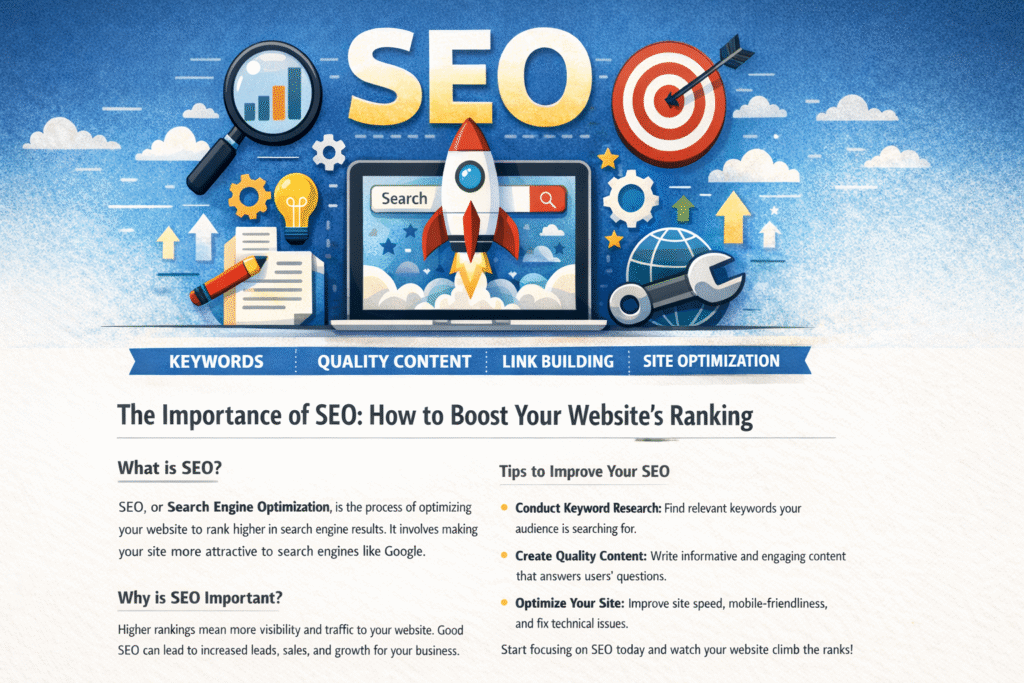
Search Engine Optimization (SEO) is the process of improving a website’s visibility on search engines like Google, Bing, and Yahoo. When done correctly, SEO helps your website rank higher in search results, attract organic (free) traffic, and build long-term online credibility. In today’s digital-first world, SEO is not optional—it’s essential.
What is SEO?
SEO involves optimizing your website’s content, structure, and technical setup so search engines can easily understand and rank it. The goal is simple: appear on the first page of search results for relevant keywords your audience is searching for.
Why is SEO Important?
- Increases organic traffic without paying for ads
- Builds trust and credibility with users
- Improves user experience and site usability
- Delivers long-term results compared to paid campaigns
- Higher ROI than many other marketing channels
Types of SEO
1. On-Page SEO
On-page SEO focuses on optimizing elements within your website.
- Keyword research and placement
- Optimized title tags and meta descriptions
- Proper heading structure (H1, H2, H3)
- Internal linking
- High-quality, relevant content
2. Off-Page SEO
Off-page SEO improves your site’s authority and trustworthiness.
- Backlink building
- Brand mentions
- Social media sharing
- Guest blogging
3. Technical SEO
Technical SEO ensures search engines can crawl and index your site effectively.
- Website speed optimization
- Mobile-friendliness
- Secure website (HTTPS)
- XML sitemaps
- Fixing broken links and crawl errors
Key SEO Ranking Factors
- High-quality, original content
- Page loading speed
- Mobile responsiveness
- Backlinks from authoritative websites
- User engagement (bounce rate, time on site)
- Proper keyword targeting
SEO Best Practices
- Focus on search intent, not just keywords
- Publish valuable and updated content regularly
- Optimize for mobile-first indexing
- Use analytics tools like Google Analytics and Search Console
- Avoid black-hat SEO techniques like keyword stuffing
Common SEO Tools
- Google Search Console
- Google Analytics
- Ahrefs
- SEMrush
- Screaming Frog
- Ubersuggest
Conclusion
SEO is a powerful digital marketing strategy that helps businesses grow organically and sustainably. While it may take time to see results, consistent SEO efforts can deliver long-term success, better visibility, and higher conversions. Whether you’re a beginner or a professional, mastering SEO is a valuable skill in today’s competitive digital landscape.
Author: Prasad Nirale